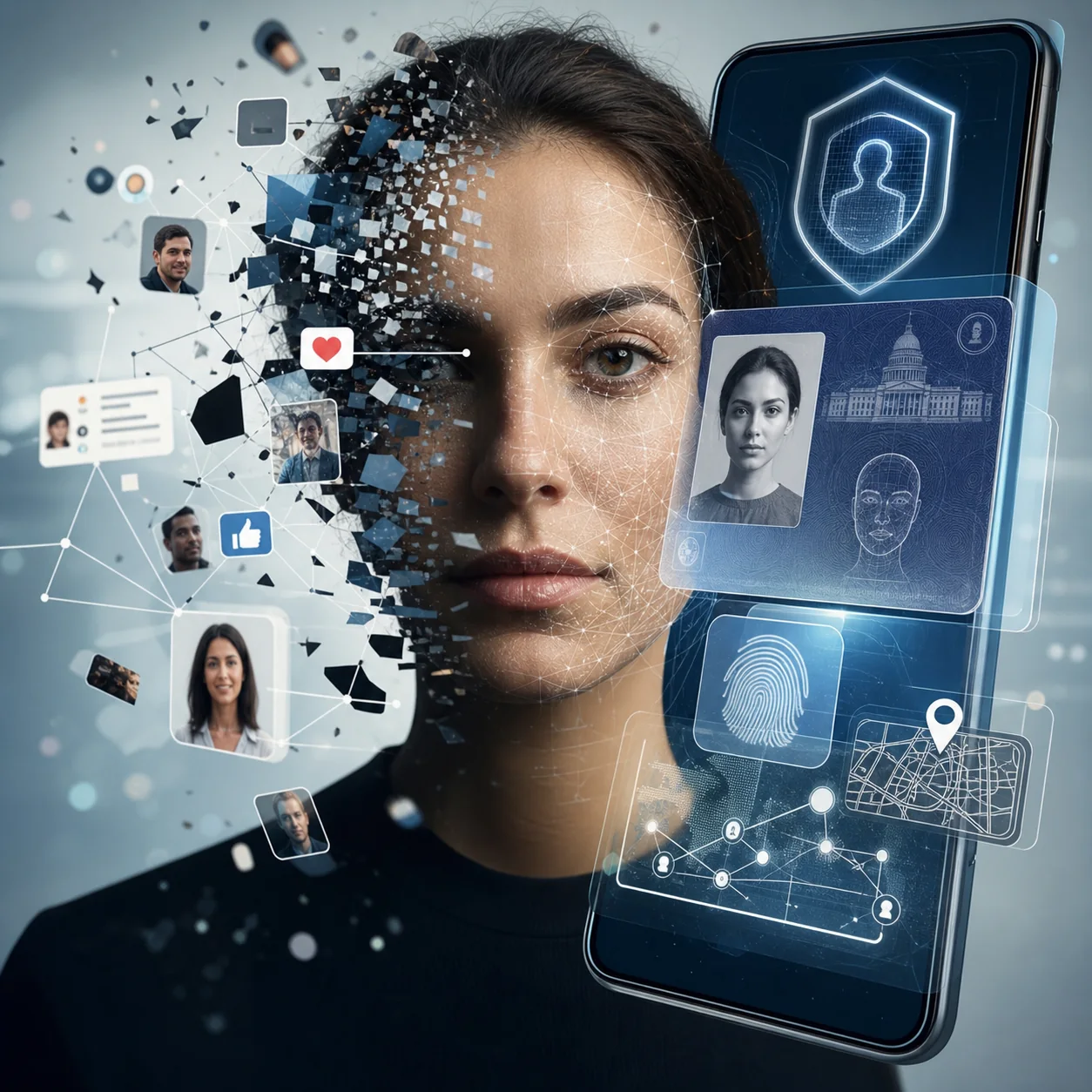
Digital ID Normalization: Từ Instagram Profile Đến Government ID

“First they ask for your email. Then your phone number. Then your face. Then your iris. Then your DNA.”


TL;DR

  • Gen Z đã tự nguyện build digital identity từ nhỏ (social media profiles)
  • Government Digital ID chỉ là bước tiếp theo tự nhiên
  • EU Digital Identity Wallet: mandatory by end of 2026
  • Worldcoin đã scan iris của millions người — kể cả sau khi bị ban
  • “Verify to exist” đang trở thành norm

Phần 1: The Identity Pipeline — Từ MySpace Đến Biometric ID

1.1 Gen Z: Digital Identity Natives

Các thế hệ trước: Identity = physical (birth certificate, passport, driver’s license)

Gen Z: Identity = digital FIRST

TuổiDigital Identity Milestone
0Bố mẹ post ảnh siêu âm lên Facebook
1Có Instagram account (do bố mẹ)
8Có email riêng
10Gaming accounts (Roblox, Minecraft)
13TikTok, Snapchat, Instagram
16Verification required (phone, face)
18Government digital ID

Gen Z không “adopt” digital identity — họ never knew anything else.

1.2 Normalization Process

[Email verification] → "Normal, for security"
[Phone verification] → "Normal, 2FA is good"
[Face ID unlock] → "Convenient, I like it"
[Face verification for accounts] → "Makes sense, stops bots"
[Government facial recognition] → "Just like Face ID, right?"
[Iris scan for services] → "Wow, so futuristic!"
[Mandatory biometric ID] → "Everyone has it"

Mỗi bước đều có “good reason”:

  • Stop bots ✅
  • Prevent fraud ✅
  • Protect children ✅
  • National security ✅

Kết quả: Full biometric surveillance infrastructure — và người dân cảm ơn vì nó.


Phần 2: Social Media — The Training Ground

2.1 What Gen Z Voluntarily Shares

Trên Instagram/TikTok:

  • Full name (often real)
  • Date of birth
  • Location (tagged posts)
  • Face (thousands of photos)
  • Voice (videos)
  • Relationships (tagged friends)
  • Political views (stories, comments)
  • Daily schedule (posting times)
  • Emotional state (captions)

Trên dating apps:

  • Height, weight
  • Sexual preferences
  • HIV status (Grindr)
  • Income level
  • Location (real-time)

“But it’s my choice to share!”

Yes. That’s the point. You’ve been trained to see sharing as normal.

2.2 Platform → Government Pipeline

Platform DataGovernment Use
Facial photosFacial recognition DB
Location historyMovement tracking
Social graphNetwork analysis
Political postsThreat assessment
Voice recordingsVoice recognition
Biometric (Face ID)Identity verification

Governments don’t need to build surveillance from scratch.

They just need access to what platforms already collected.


Phần 3: Age Verification — The Trojan Horse

3.1 “Protect The Children”

2026 Headlines:

  • “Age verification laws sweep US and EU”
  • “Social media must verify users are 13+”
  • “Porn sites require ID verification”

Methods being implemented:

  1. Government ID upload — Scan passport/driver’s license
  2. AI facial analysis — Estimate age from face
  3. Third-party verification — Share data with verification company
  4. Biometric scan — Fingerprint/iris for “extra security”

The narrative: “We must protect children from harmful content!”

The reality: Universal identity verification infrastructure.

3.2 The Slippery Slope (That’s Actually a Ski Jump)

2024: “Only for porn sites” 2025: “Only for social media (under 16)” 2026: “All social media, all ages” 2027: “All websites with user content” 2028: “All internet access” 2030: “All digital services”

Once infrastructure exists, scope ALWAYS expands.

“A sweeping wave of age verification laws threatens to turn personal devices into government-supervised access points.” — Daily Declaration, April 2026


Phần 4: EU Digital Identity Wallet — The Blueprint

4.1 What Is EUDI Wallet?

EU Digital Identity Wallet: Mandatory for all EU countries by end of 2026.

Features:

  • Store government ID
  • Store driver’s license
  • Store health records
  • Store educational credentials
  • Store financial information
  • Single sign-on for all services

4.2 “Selective Disclosure” — The Lie

The promise: “You control what you share!”

The reality:

  • Want to access this website? Verify identity.
  • Want to buy this product? Verify age.
  • Want to post this comment? Verify real name.
  • “Choice” = Verify or don’t participate

4.3 Privacy Concerns (From Privacy Groups)

Epicenter.Works (Austria digital rights group) identified 5 major concerns:

  1. Biometric data centralization — Single point of failure
  2. Tracking potential — Every verification logged
  3. Mission creep — “Optional” becomes mandatory
  4. Third-party access — Who else sees your data?
  5. Revocability — Can your identity be “turned off”?

Phần 5: Worldcoin — The Crypto Trojan Horse

5.1 What Is Worldcoin?

Founded by: Sam Altman (CEO of OpenAI)

The pitch: “Free crypto! Just scan your iris!”

The process:

  1. Find an “Orb” (iris scanning device)
  2. Scan your iris
  3. Receive “World ID” (proof you’re human)
  4. Get free WLD tokens

Target market: Developing countries, young people, crypto curious.

5.2 What Actually Happened

  • Millions of iris scans collected globally
  • Targeted poor communities with “free money” incentive
  • Data stored (despite “privacy” claims)
  • Multiple countries banned operations
  • Spain ordered deletion of all iris data (April 2025)
  • Bavaria investigation ongoing

But here’s the thing: Even after bans, they already have the data.

5.3 The Real Goal

Worldcoin isn’t about crypto. It’s about:

  1. Proof of Personhood — Building infrastructure to verify “you’re human”
  2. AI preparation — When AI can fake everything, biometrics = only “proof”
  3. UBI distribution — Need verified identity to receive UBI
  4. Global ID database — Private company, global reach

Sam Altman builds AI that creates the problem (deepfakes, bots). Sam Altman builds Worldcoin as the “solution” (biometric verification).

Create problem → Sell solution.


Phần 6: Gen Z Psychology — Why They Accept It

6.1 “I Have Nothing To Hide”

Most common response.

Counter-questions:

  • Do you close the bathroom door?
  • Do you share your passwords?
  • Do you want your employer to see all your messages?
  • Do you want your ex to know your location 24/7?

Everyone has something to hide. That’s called privacy.

6.2 “It’s For Security”

Security theater vs actual security:

Security TheaterActual Security
TSA (catches 0 terrorists)Basic locked cockpit doors
ID verification (stops few bots)End-to-end encryption
Facial recognitionStrong passwords + 2FA

Most “security” measures are actually surveillance measures.

6.3 “Everyone’s Doing It”

Normalization complete.

Gen Z doesn’t question digital ID because:

  • Their friends do it
  • Influencers do it
  • It’s “required” by platforms
  • Alternative = social exclusion

The cost of non-compliance is too high.

6.4 “It’s Convenient”

The ultimate argument.

And it’s true! Digital ID IS convenient.

But so is:

  • Giving someone your house keys
  • Sharing your location 24/7
  • Letting someone read all your messages

Convenience is how they get you.

“Convenience is the gateway drug to surveillance.”


Phần 7: The Endgame — Digital Existence Permit

7.1 2030 Scenario

To exist digitally, you need:

  • Verified government ID
  • Biometric confirmation
  • Good social credit score
  • Updated vaccination status
  • Carbon allowance compliance

Without Digital ID:

  • No bank account
  • No social media
  • No online shopping
  • No travel booking
  • No job applications
  • No government services

“Optional” ID = Mandatory for modern life.

7.2 Kill Switch Capability

When all identity is digital:

  • Protest the wrong thing → ID suspended
  • Post “misinformation” → Account flagged
  • Associate with wrong people → Services restricted
  • Exceed carbon limit → Purchases blocked

Not dystopia — this is already happening in China.

And the infrastructure is being built everywhere else.


Phần 8: Exit Strategy — Digital Sovereignty

Level 1: Awareness

  • Recognize every “convenience” has a cost
  • Question every “verification requirement”
  • Understand you’re the product

Level 2: Minimize

  • Use aliases where possible
  • Limit biometric sharing
  • Separate identities (work/personal/anonymous)
  • Delete old accounts

Level 3: Alternatives

  • Cash for purchases (while it exists)
  • Privacy-focused services (Signal, ProtonMail)
  • VPN/Tor for browsing
  • Decentralized identity (when available)

Level 4: Resistance

  • Support privacy legislation
  • Use privacy as a voting issue
  • Educate others
  • Build parallel systems

Kết Luận

Gen Z đã được training từ nhỏ để:

  1. See digital identity as normal — “Everyone has profiles”
  2. Trade privacy for convenience — “Face ID is so easy”
  3. Trust platforms with personal data — “They need it to serve me”
  4. Accept verification as security — “It stops bad actors”

Government digital ID không phải invasion — nó là culmination.

Tất cả những gì Gen Z đã voluntarily share trên social media, giờ sẽ được formalized, centralized, và controlled bởi governments.

Câu hỏi không phải “Should I get digital ID?”

Câu hỏi là: “When they can turn off my identity, who controls my existence?”

“In a world where you need permission to exist digitally, anonymity is the last form of freedom.”


Sources

  • Daily Declaration: “Online ID Age Verification” (April 2026)
  • Fortune: “Social media companies fighting age verification” (March 2026)
  • Biometric Update: “ENISA EU Digital Identity Wallet” (April 2026)
  • The Conversation: “European digital identity wallets risks” (April 2026)
  • Digital Watch: “Worldcoin iris scan data deletion” (April 2025)
  • Epicenter.Works: EUDI Wallet privacy analysis

Nguồn: Phân tích tổng hợp, tháng 4/2026